

Hey there! As a supplier of braided cable sleeves, I often get asked about the elasticity of these nifty products. So, I thought I'd take a deep dive into what elasticity means in the context of braided cable sleeves and why it matters.
What is Elasticity Anyway?
Let's start with the basics. Elasticity, in simple terms, is the ability of a material to stretch and then return to its original shape. You've probably seen this in action with a rubber band. When you pull it, it gets longer, but as soon as you let go, it snaps back to its normal size. That's elasticity at work.
In the world of braided cable sleeves, elasticity is super important. It determines how well the sleeve can fit around different cables, how much it can expand to accommodate larger connectors, and how it holds up over time.
Why Elasticity Matters for Braided Cable Sleeves
First off, a sleeve with good elasticity is incredibly versatile. It can be used on a wide range of cable sizes. Whether you're dealing with thin Ethernet cables or thick power cords, an elastic sleeve can stretch to fit them all. This means you don't have to stock up on different sizes of sleeves for different cables, which can save you time and money.
Secondly, elasticity is crucial when it comes to installation. A sleeve that can stretch easily makes it a breeze to slide over cables and connectors. You don't have to struggle with forcing the sleeve into place, which can be frustrating and may even damage the cable or the sleeve itself.
Another benefit of elastic braided cable sleeves is that they provide a snug fit. Once you've installed the sleeve, it stays in place and doesn't slip off easily. This is especially important in applications where the cables are subject to movement or vibration. A loose-fitting sleeve could come off, exposing the cables and potentially causing damage.
Factors Affecting the Elasticity of Braided Cable Sleeves
There are several factors that can influence the elasticity of a braided cable sleeve. The first is the material used to make the sleeve. Different materials have different levels of elasticity. For example, sleeves made from synthetic fibers like polyester or nylon tend to be more elastic than those made from natural fibers.
The construction of the braid also plays a role. A tight braid will generally have less elasticity than a loose one. This is because a tight braid restricts the movement of the fibers, making it harder for the sleeve to stretch. On the other hand, a loose braid allows the fibers to move more freely, resulting in greater elasticity.

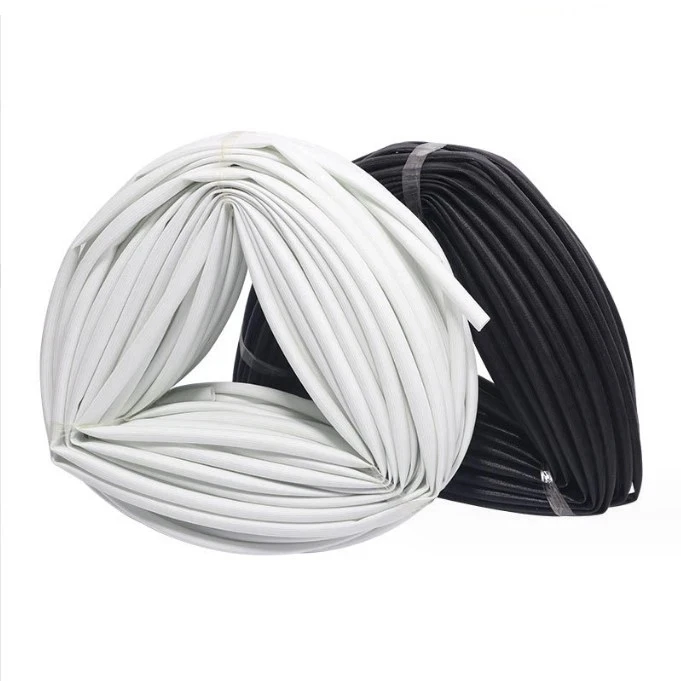
The thickness of the sleeve can also affect its elasticity. Thicker sleeves tend to be less elastic than thinner ones. This is because there is more material to stretch, which requires more force. However, thicker sleeves may offer other benefits, such as better protection for the cables.
Measuring the Elasticity of Braided Cable Sleeves
So, how do you measure the elasticity of a braided cable sleeve? One common method is to use a tensile test. In a tensile test, a sample of the sleeve is clamped at both ends and then pulled until it breaks. The amount of force required to stretch the sleeve and the distance it stretches before breaking are measured. These measurements can be used to calculate the sleeve's elastic modulus, which is a measure of its stiffness.
Another way to measure elasticity is to simply stretch the sleeve by hand and see how far it can go before it starts to feel tight. This is a more subjective method, but it can give you a good idea of how the sleeve will perform in real-world applications.
Comparing Braided Cable Sleeves with Other Types of Tubes
When it comes to cable protection, braided cable sleeves aren't the only option. There are also other types of tubes available, such as High Temperature Fiberglass Tube, Silica Gel Tube, and PVC Tube. Each of these tubes has its own unique properties, including elasticity.
High temperature fiberglass tubes are known for their excellent heat resistance. However, they tend to be less elastic than braided cable sleeves. This means they may not be as easy to install on cables with large connectors.
Silica gel tubes are flexible and have good chemical resistance. They also have a moderate level of elasticity. However, they may not be as durable as braided cable sleeves, especially in applications where the cables are subject to a lot of movement.
PVC tubes are widely used for cable protection due to their low cost and ease of installation. They have a relatively high level of elasticity, but they may not be suitable for high-temperature applications.
Choosing the Right Braided Cable Sleeve for Your Needs
When choosing a braided cable sleeve, it's important to consider your specific needs. If you need a sleeve that can stretch to fit a wide range of cable sizes, look for one with high elasticity. If you're working in a high-temperature environment, you may want to choose a sleeve made from a heat-resistant material.
It's also a good idea to test the sleeve before you make a purchase. You can do this by stretching it by hand or by installing it on a sample cable. This will give you a better idea of how the sleeve will perform in your application.
Conclusion
In conclusion, the elasticity of a braided cable sleeve is an important factor to consider when choosing a cable protection solution. A sleeve with good elasticity is versatile, easy to install, and provides a snug fit. By understanding the factors that affect elasticity and how to measure it, you can choose the right sleeve for your needs.
If you're interested in purchasing braided cable sleeves or have any questions about their elasticity or other properties, feel free to reach out. I'm here to help you find the best solution for your cable protection needs.
References
- Textbook on Material Science and Engineering
- Industry reports on cable protection products