

Hey there! As a PVC tube supplier, I often get asked about what goes into making these tubes. So, let's dive right in and break down the chemical composition of a PVC tube.
What's PVC Anyway?
PVC stands for polyvinyl chloride. It's a type of plastic that's super popular for making all kinds of stuff, including tubes. PVC is made from vinyl chloride monomers, which are basically small building blocks that link together to form long chains called polymers.
The Main Ingredients
Vinyl Chloride Monomers (VCM)
The core of PVC is vinyl chloride monomers. These are produced through a chemical reaction between ethylene and chlorine. Ethylene is a hydrocarbon that comes from natural gas or petroleum, while chlorine is usually obtained by electrolyzing saltwater. When these two react under specific conditions, they form vinyl chloride monomers.
Once the VCM is produced, it undergoes a process called polymerization. This is where thousands of VCM molecules join together to form a long, continuous chain - that's the PVC polymer. The way these chains are arranged and their length can affect the properties of the final PVC product.
Plasticizers
Pure PVC is quite rigid and brittle. To make it more flexible and easier to work with, plasticizers are added. These are chemicals that are mixed into the PVC during the manufacturing process. The most commonly used plasticizers for PVC tubes are phthalates.
Phthalates work by inserting themselves between the PVC polymer chains. This reduces the forces between the chains, allowing them to slide past each other more easily. As a result, the PVC becomes softer, more flexible, and more resistant to cracking. However, in recent years, there have been some concerns about the safety of certain phthalates, so alternative plasticizers like adipates and trimellitates are also being used.
Stabilizers
PVC is sensitive to heat and light. When exposed to these elements, it can break down and lose its properties. That's where stabilizers come in. Stabilizers are added to PVC to prevent it from degrading when it's being processed or used in the real world.
There are different types of stabilizers, including lead-based, calcium-zinc-based, and tin-based stabilizers. Lead-based stabilizers were widely used in the past because they were very effective at preventing PVC degradation. However, due to concerns about lead toxicity, their use has been restricted in many countries. Calcium-zinc-based stabilizers are a more environmentally friendly alternative and are now commonly used in PVC tube manufacturing.
Lubricants
Lubricants are another important additive in PVC tube production. They help the PVC material flow smoothly through the manufacturing equipment, such as extruders. This ensures that the tubes are produced with a uniform thickness and a smooth surface finish.
Common lubricants used in PVC tube manufacturing include fatty acids, esters, and waxes. These lubricants reduce the friction between the PVC polymer and the metal surfaces of the manufacturing equipment, making the extrusion process more efficient.
Fillers
Fillers are sometimes added to PVC tubes to reduce costs and improve certain properties. Calcium carbonate is a commonly used filler in PVC tube production. It can increase the stiffness and hardness of the tubes, as well as improve their dimensional stability.
Adding fillers can also reduce the amount of PVC resin needed, which can lower the overall cost of production. However, too much filler can negatively affect the mechanical properties of the tubes, so the amount of filler used needs to be carefully controlled.
Other Types of Tubes We Offer
Apart from PVC tubes, we also supply other types of high - quality tubes. For instance, if you're looking for something that can withstand high temperatures, we have High Temperature Fiberglass Tube. These tubes are made from fiberglass, which has excellent heat resistance properties.
Another option is the Glass Fiber Silicone Casing. This type of casing combines the strength of glass fiber with the flexibility and heat resistance of silicone. It's great for applications where you need a protective covering that can handle tough conditions.
And if you need a tube that's flexible and can be used in a variety of applications, our Silica Gel Tube might be the perfect choice. Silica gel tubes are known for their good chemical resistance and flexibility.
Why Choose Our PVC Tubes?
Our PVC tubes are made with high - quality raw materials and the latest manufacturing techniques. We carefully control the chemical composition to ensure that our tubes have the right balance of properties. Whether you need a flexible tube for a plumbing application or a rigid tube for an industrial use, we can provide the perfect solution.

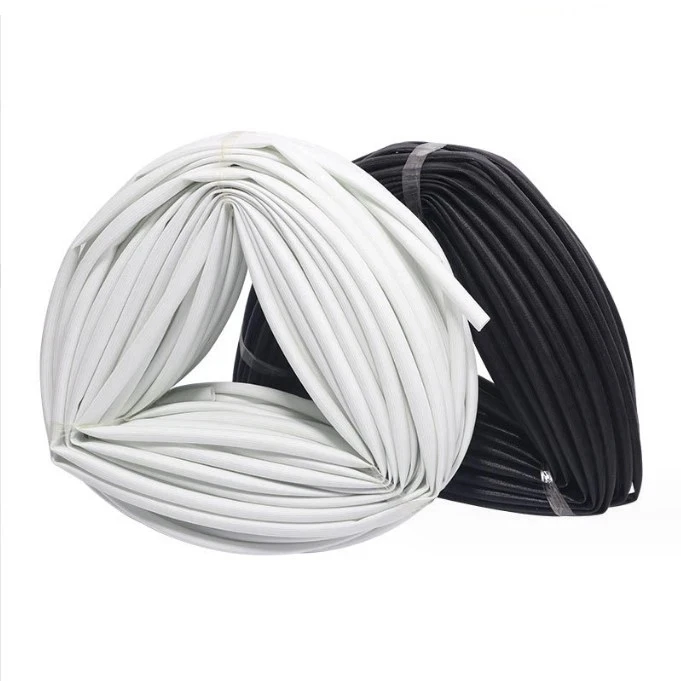
Our team of experts is always available to answer any questions you might have about our PVC tubes or other products. We can also help you choose the right tube for your specific application, taking into account factors like temperature, pressure, and chemical exposure.
Let's Talk Business
If you're in the market for PVC tubes or any of our other tube products, we'd love to hear from you. Whether you're a small business looking for a one - time order or a large corporation in need of a regular supply, we can work with you to meet your requirements.
Contact us today to start a conversation about your tube needs. We're committed to providing you with the best products and the highest level of customer service.
References
- "Polyvinyl Chloride (PVC) Handbook" by William V. Titow
- "Plastics Additives: An A-Z Reference" by Geoffrey Pritchard