

As a supplier of PFA Corrugated Tubes, I often encounter questions from customers regarding the flame - retardant properties of our products. This blog aims to provide a comprehensive analysis of whether PFA Corrugated Tubes are flame - retardant, based on scientific facts and industry knowledge.
Understanding PFA and Its Corrugated Tubes
PFA, or Perfluoroalkoxy alkane, is a fluoropolymer known for its excellent chemical resistance, high - temperature stability, and non - stick properties. These characteristics make PFA an ideal material for various applications, including the manufacturing of corrugated tubes. PFA Corrugated Tubes are widely used in industries such as electronics, chemical processing, and aerospace due to their flexibility, durability, and ability to protect cables and wires.
Flame - Retardant Mechanisms
Flame retardancy refers to a material's ability to resist ignition, slow down the spread of fire, and self - extinguish when the ignition source is removed. There are several mechanisms by which a material can achieve flame retardancy:
- Endothermic Decomposition: Some flame - retardant materials absorb heat during decomposition, which reduces the temperature at the surface of the material and slows down the combustion process.
- Dilution: Flame retardants can release non - combustible gases when heated. These gases dilute the oxygen and fuel vapors in the combustion zone, making it more difficult for the fire to sustain.
- Char Formation: A char layer can form on the surface of the material during combustion. This char acts as a barrier, preventing oxygen from reaching the underlying material and reducing heat transfer.
Flame - Retardant Properties of PFA Corrugated Tubes
PFA itself has inherent flame - retardant properties. The high fluorine content in PFA makes it highly resistant to ignition. When exposed to a flame, PFA does not readily burn. Instead, it tends to melt and drip, which can carry the heat away from the source of ignition.
Moreover, PFA has a high limiting oxygen index (LOI). The LOI is a measure of the minimum concentration of oxygen in a mixture of oxygen and nitrogen that will support combustion. A higher LOI indicates better flame - retardant properties. PFA typically has an LOI of around 95%, which means that it requires a very high concentration of oxygen to burn. In normal atmospheric conditions (where the oxygen concentration is about 21%), PFA is extremely difficult to ignite.
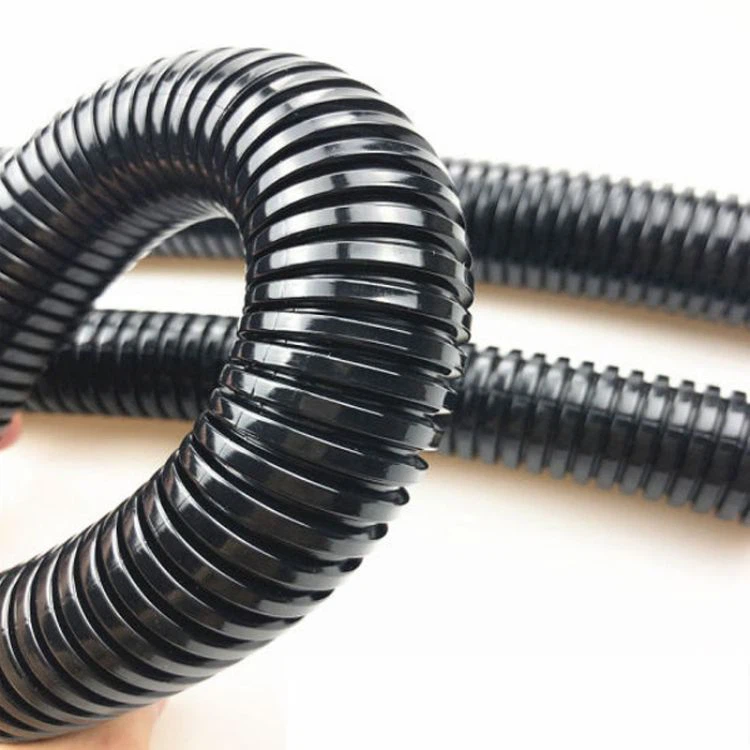

In practical applications, PFA Corrugated Tubes can effectively prevent the spread of fire. They can protect cables and wires from being damaged by flames, which is crucial in ensuring the safety of electrical systems. For example, in a data center, PFA Corrugated Tubes can safeguard the network cables from fire hazards, reducing the risk of system failures and data loss.
Comparison with Other Corrugated Tubes
Let's compare PFA Corrugated Tubes with other types of corrugated tubes, such as Nylon Corrugated Tube and Orange Corrugated Tube.
Nylon Corrugated Tubes are commonly used in automotive and industrial applications. While nylon has some degree of flame retardancy, it is generally less fire - resistant than PFA. Nylon can burn relatively easily when exposed to a flame, and it may continue to burn even after the ignition source is removed.
Orange Corrugated Tubes are often made of polyethylene or polypropylene. These materials are highly combustible and have poor flame - retardant properties. They can quickly catch fire and spread the flames, posing a significant safety risk in applications where fire protection is required.
In contrast, PFA Corrugated Tube offers superior flame - retardant performance, making it a preferred choice for applications in high - risk environments.
Industry Standards and Certifications
PFA Corrugated Tubes need to meet certain industry standards and certifications to ensure their flame - retardant properties. For example, in the electrical industry, products may need to comply with UL 94, which is a standard for flammability of plastic materials for parts in devices and appliances. PFA Corrugated Tubes can achieve high ratings in UL 94 tests, such as V - 0, which indicates excellent flame - retardant performance.
Applications Requiring Flame - Retardant PFA Corrugated Tubes
There are many applications where the flame - retardant properties of PFA Corrugated Tubes are essential:
- Electrical and Electronics: In power distribution systems, control panels, and electronic equipment, PFA Corrugated Tubes can protect cables from fire, ensuring the reliable operation of the electrical system.
- Chemical Processing: In chemical plants, where there is a risk of fire due to the presence of flammable chemicals, PFA Corrugated Tubes can be used to protect instrumentation cables and wiring.
- Aerospace: In aircraft and spacecraft, fire safety is of utmost importance. PFA Corrugated Tubes can be used to protect critical wiring and cables, reducing the risk of fire - related accidents.
Conclusion and Call to Action
In conclusion, PFA Corrugated Tubes are indeed flame - retardant. Their inherent flame - retardant properties, high LOI, and ability to meet industry standards make them a reliable choice for applications where fire safety is a concern.
If you are in need of high - quality, flame - retardant PFA Corrugated Tubes for your project, I encourage you to contact us for procurement and further discussion. We can provide you with detailed product information, samples, and competitive pricing.
References
- "Fluoropolymers: Synthesis, Properties, and Applications" by John Scheirs
- "Handbook of Polymer Flammability" by Charles A. Wilkie
- UL 94 Standard for Safety of Flammability of Plastic Materials for Parts in Devices and Appliances