

As a seasoned supplier of black corrugated tubes, I've been asked numerous times about the fatigue resistance of these essential components. In this blog, I'll delve into the science behind fatigue resistance, examine the factors that affect it in black corrugated tubes, and share insights based on my experience in the industry.
Understanding Fatigue Resistance
Fatigue resistance refers to a material's ability to withstand repeated loading and unloading cycles without failing. In the context of black corrugated tubes, this means the tube's capacity to endure flexing, bending, and vibration over an extended period without cracking, breaking, or losing its structural integrity.
When a corrugated tube is subjected to cyclic loading, microscopic cracks can initiate at stress concentration points, such as the peaks and valleys of the corrugations. Over time, these cracks can grow and propagate, eventually leading to catastrophic failure. The fatigue life of a tube is determined by the number of cycles it can withstand before failure occurs.
Factors Affecting Fatigue Resistance in Black Corrugated Tubes
Several factors influence the fatigue resistance of black corrugated tubes. Understanding these factors is crucial for selecting the right tube for your application and ensuring its long-term performance.
Material Composition
The material from which the black corrugated tube is made plays a significant role in its fatigue resistance. Different materials have different mechanical properties, such as strength, ductility, and toughness, which affect how they respond to cyclic loading.
Common materials used for black corrugated tubes include polyethylene (PE), polypropylene (PP), and nylon. Each material has its own advantages and disadvantages when it comes to fatigue resistance. For example, nylon is known for its high strength and excellent fatigue resistance, making it a popular choice for applications where the tube will be subjected to frequent bending and flexing. On the other hand, PE and PP are more flexible and have good chemical resistance, but may have lower fatigue resistance compared to nylon. You can learn more about Nylon Corrugated Tube on our website.
Wall Thickness
The wall thickness of the black corrugated tube also affects its fatigue resistance. Generally, thicker walls provide greater strength and stiffness, which can help to resist cracking and failure under cyclic loading. However, thicker walls also increase the weight and cost of the tube, so it's important to find the right balance between wall thickness and performance.
Corrugation Design
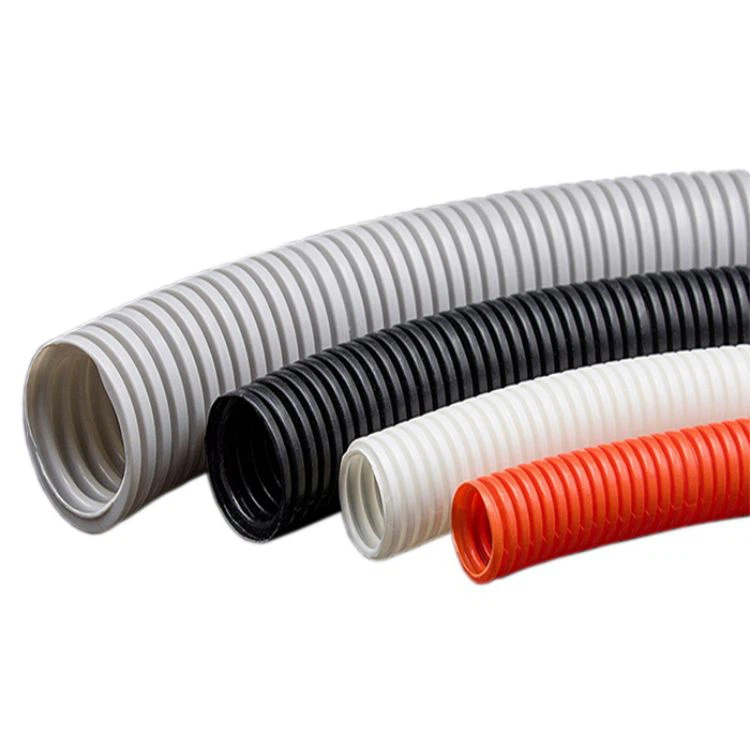
The design of the corrugations in the tube can have a significant impact on its fatigue resistance. The shape, size, and pitch of the corrugations can affect the stress distribution within the tube and the way it responds to bending and flexing.
For example, tubes with deeper and wider corrugations may have better flexibility and fatigue resistance compared to tubes with shallower and narrower corrugations. This is because deeper corrugations allow the tube to bend more easily without creating excessive stress concentration points.
Environmental Conditions
The environmental conditions in which the black corrugated tube is used can also affect its fatigue resistance. Factors such as temperature, humidity, and exposure to chemicals can all have an impact on the mechanical properties of the tube and its ability to withstand cyclic loading.
For example, high temperatures can cause the material to soften and lose its strength, while low temperatures can make the material more brittle and prone to cracking. Exposure to chemicals can also cause the material to degrade over time, reducing its fatigue resistance.
Testing and Evaluation of Fatigue Resistance
To determine the fatigue resistance of black corrugated tubes, various testing methods can be used. These tests typically involve subjecting the tube to cyclic loading under controlled conditions and monitoring its performance over time.
One common testing method is the flexural fatigue test, which involves bending the tube back and forth a specified number of times at a given frequency and amplitude. The tube is then inspected for signs of cracking or failure, and the number of cycles it can withstand before failure is recorded.
Another testing method is the vibration test, which involves subjecting the tube to vibration at a specified frequency and amplitude. The tube is then monitored for signs of damage or failure, and the vibration time it can withstand before failure is recorded.
By conducting these tests, manufacturers can evaluate the fatigue resistance of their black corrugated tubes and ensure that they meet the required performance standards.
Case Studies: Real-World Applications
To illustrate the importance of fatigue resistance in black corrugated tubes, let's look at some real-world applications where these tubes are used.
Automotive Industry
In the automotive industry, black corrugated tubes are commonly used to protect wires and cables from damage caused by vibration, bending, and abrasion. These tubes are often subjected to frequent flexing and bending as the vehicle moves, making fatigue resistance a critical factor in their performance.
For example, in the engine compartment of a car, black corrugated tubes are used to protect the wiring harnesses that connect the various electrical components. These tubes need to be able to withstand the constant vibration and movement of the engine without cracking or breaking, ensuring the reliable operation of the electrical system.
Industrial Automation
In industrial automation applications, black corrugated tubes are used to protect cables and hoses in robotic arms, conveyor systems, and other machinery. These tubes are often subjected to high levels of stress and fatigue as the machinery moves and operates, making fatigue resistance a key consideration in their selection.
For example, in a robotic arm, black corrugated tubes are used to protect the cables that control the movement of the arm. These tubes need to be able to withstand the repeated bending and flexing of the arm without failing, ensuring the smooth operation of the robot.
Conclusion
In conclusion, black corrugated tubes can have good fatigue resistance, but it depends on several factors, including material composition, wall thickness, corrugation design, and environmental conditions. By understanding these factors and selecting the right tube for your application, you can ensure that your black corrugated tubes will provide long-term performance and reliability.
If you're in the market for black corrugated tubes or other types of corrugated tubes, such as Orange Corrugated Tube or PFA Corrugated Tube, I encourage you to contact us for more information. Our team of experts can help you select the right tube for your application and provide you with the support and guidance you need to ensure its successful installation and operation.

References
- ASTM D6742 - Standard Test Method for Determining the Flexural Fatigue Resistance of Plastics
- ISO 13949 - Rubber and Plastics Hoses and Hose Assemblies - Determination of the Fatigue Resistance by Pulsation